
Office Address
5th Floor, Mpelembe House
Ndola, Zambia
Phone Number
+260 (955) 367 762
+260 (966) 949 783
Email Address
info@trackex.io
support@trackex.io
5th Floor, Mpelembe House
Ndola, Zambia
+260 (955) 367 762
+260 (966) 949 783
info@trackex.io
support@trackex.io






 by Mapsaels Design
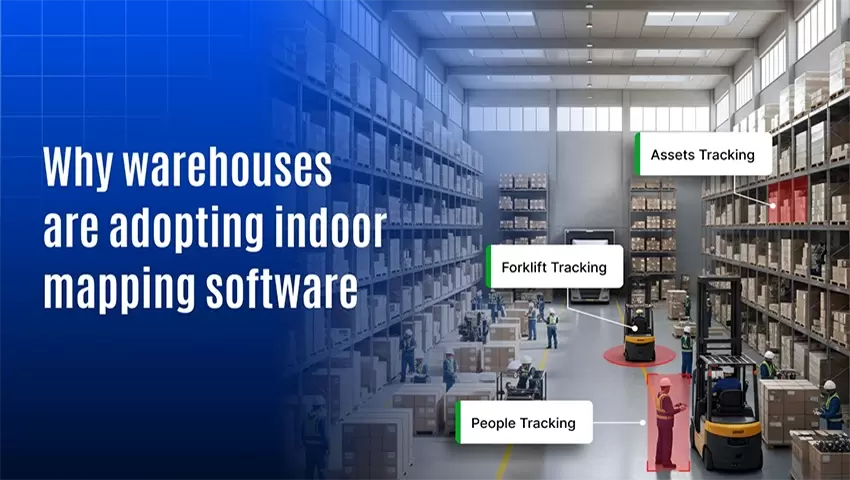
Warehouses today are under constant pressure. Order volumes are rising. Delivery timelines are shrinking. At the same time, floor space remains limited and costly. This is why indoor mapping software is becoming a critical tool for modern warehouse operations. Instead of relying on static layouts and manual coordination, warehouses now want real-time space visibility that reflects what is actually happening on the floor.
Space visibility in warehouses is not just about layout drawings. It is about operational awareness.
It means:
When space visibility is strong, warehouse teams can quickly answer questions like:
This level of clarity is difficult to achieve with traditional methods.
Many warehouses still depend on outdated methods to manage space. These methods fail as operations scale.
As warehouses grow, these gaps directly impact productivity and order accuracy.
Warehouse operations are changing rapidly. Several industry forces are driving adoption.
Indoor mapping aligns perfectly with these operational realities.
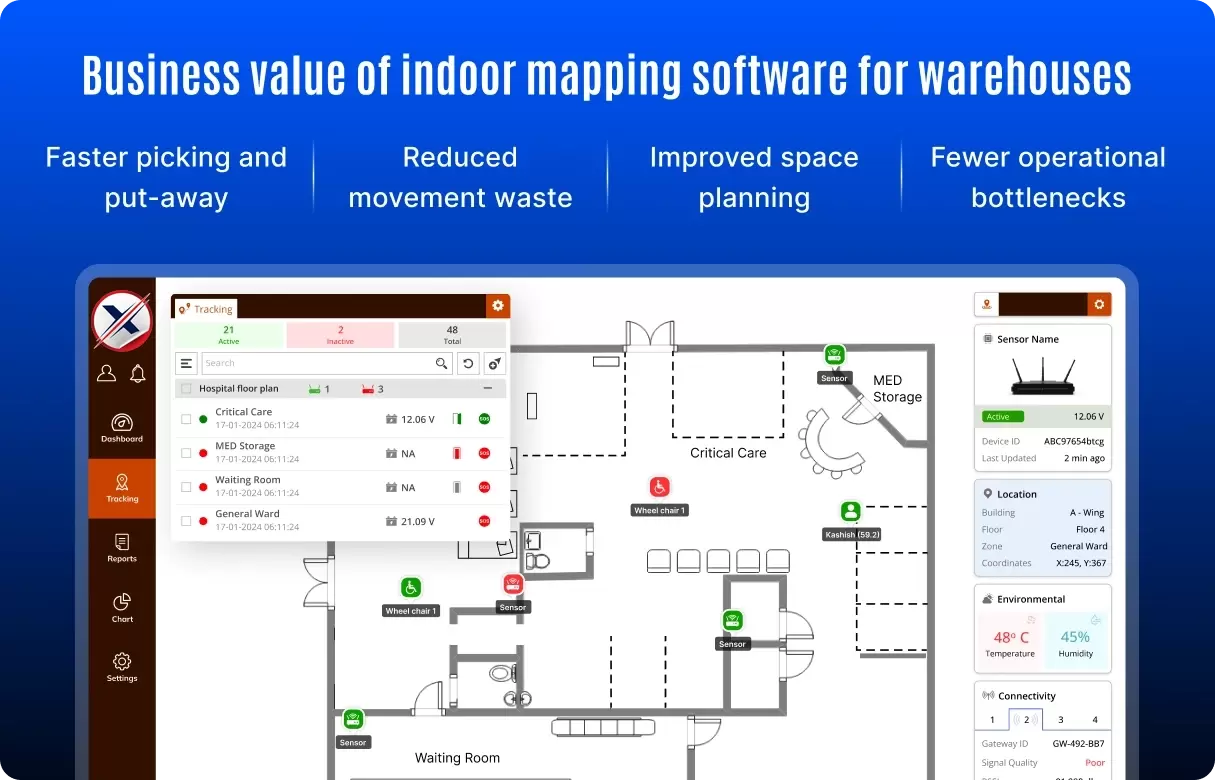
Indoor mapping software creates a digital representation of the warehouse floor. This representation reflects zones, pathways, and space usage dynamically.
At an operational level, it enables:
An indoor mapping platform does not replace warehouse processes. It strengthens them by adding visibility and structure.
Warehouse productivity depends heavily on movement efficiency.
Indoor mapping helps by:
When workers understand space clearly, performance becomes consistent.
From a B2B perspective, scalability and repeatability matter.
Manual tools fail because:
Indoor mapping software provides:
This makes it a long-term operational investment.
Indoor mapping is relevant across multiple warehouse environments.
Typical applications include:
Each environment benefits from improved space visibility.
B2B buyers should evaluate solutions carefully.
Important factors to assess:
The goal is operational clarity, not complexity.
Warehouses generate massive operational data. Without spatial context, this data remains incomplete.
Indoor mapping converts space into a measurable asset. It enables:
This intelligence supports sustainable growth.

Warehouses can no longer afford blind spots. Space visibility directly affects efficiency, cost, and service quality. Indoor mapping software addresses this challenge by turning warehouse layouts into live, actionable insights. For B2B organizations, adopting an indoor mapping platform means moving from reactive operations to controlled, data-driven execution. It is a practical step toward smarter warehouse management.