
Office Address
5th Floor, Mpelembe House
Ndola, Zambia
Phone Number
+260 (955) 367 762
+260 (966) 949 783
Email Address
info@trackex.io
support@trackex.io
5th Floor, Mpelembe House
Ndola, Zambia
+260 (955) 367 762
+260 (966) 949 783
info@trackex.io
support@trackex.io





 by Mapsaels Design
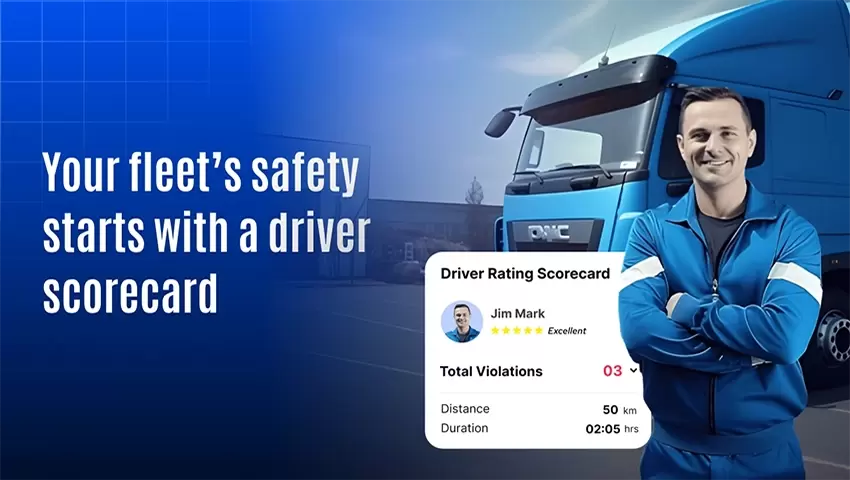
Even if you are a small fleet owner or have multiple fleets to manage, safety is your first priority. To maintain safety, you need visibility — not just whether the vehicles are on the right road, but how drivers handle the vehicle. That’s why fleets today rely on driver scorecards.
These scorecards give managers a clear picture about how each driver performs on the road. Instead of relying on manual work, managers can now identify risks, promote safe habits and reduce accidents. It’s a smarter way to improve performance and keep both drivers and assets protected everyday.
A driver scorecard is a simple report that shows how safely a driver operates a vehicle.
It collects data from telematics devices and rates drivers based on:
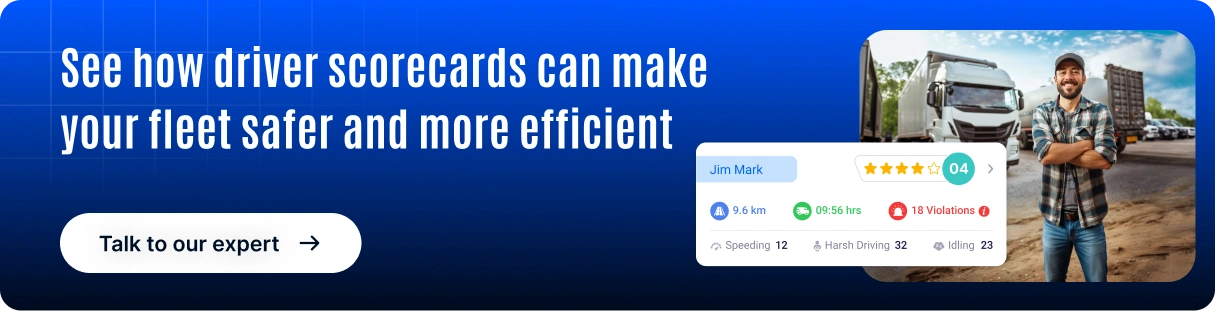
Each driver receives a score — green for safe, amber for average, and red for risky behavior. With the Driver Behavior Monitoring System, fleet managers can easily identify unsafe drivers and take early action before accidents happen.
Driver scorecards help managers do more than monitor — they help build better teams.
Managers can:
Together, these actions help managers move from simple monitoring to meaningful improvement — shaping a culture of safety across the fleet.
Driver scorecards don’t just track numbers – they measure real driving behavior. They help fleets build a strong safety culture by turning every trip into a learning opportunity.
Here’s how they reduce accidents step-by-step:
With this process, fleets become proactive — preventing accidents instead of reacting to them.
Driver scorecards don’t just improve safety; they also bring clear business benefits.
To make driver scorecards successful:
When done right, scorecards promote teamwork and a strong safety culture.
Modern driver scorecards use AI and video telematics to detect even more details.
For example, the system can now identify:
With video integration, managers can review incidents with real footage — not just data. This helps prevent accidents, protect drivers, and settle insurance disputes faster.
Fleet safety is becoming smarter and more data-driven. With advancements in telematics and AI, driver scorecards are evolving from simple tracking tools to predictive systems that identify risks before accidents happen.
AI-powered cameras will analyze driving patterns in real time and alert drivers instantly about unsafe behavior. Video telematics will also help managers review events quickly and make fair, informed decisions.
In the coming years, fleets can expect:
By combining telematics and AI, driver scorecards will become the backbone of a proactive fleet safety ecosystem — helping fleets prevent accidents rather than respond to them.
Fleet safety today is not just about avoiding accidents — it’s about building awareness and responsibility on every trip. Driver scorecards turn driving data into clear insights that save lives, reduce costs, and make fleets more efficient. Managers who use these tools don’t just get reports they gain real control and confidence in how their fleets operate. When drivers know their performance is valued, they drive better, stay safer, and protect both vehicles and business. Because in the end, safer driving protects more than your fleet — it protects your future.